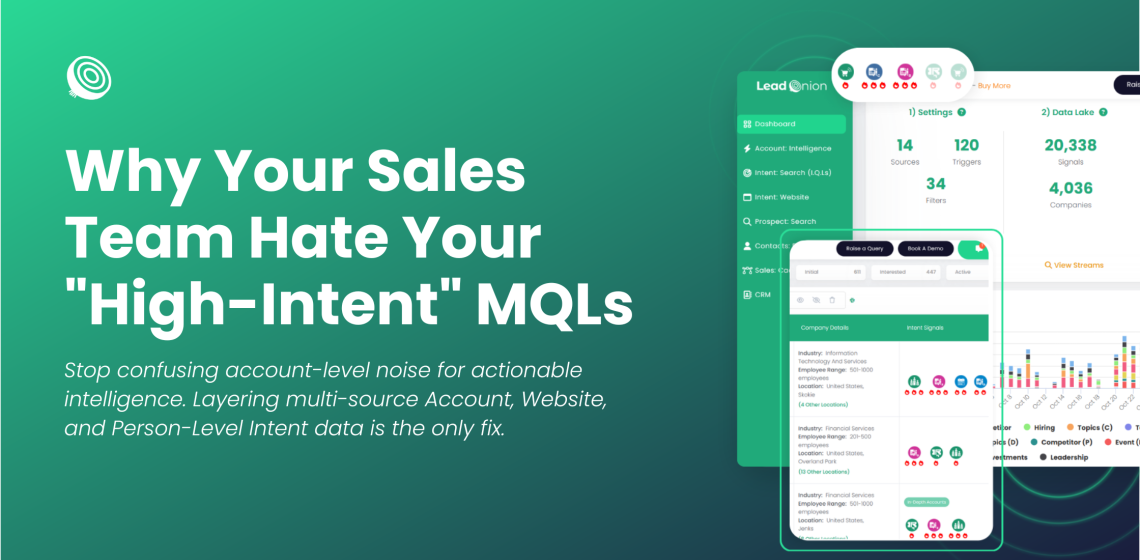
Stop Single-Signal Noise: Switch to Multi-Signal Intent Data
That “high-intent” MQL your ABM platform just passed over? It was an intern. Again.
Marketing celebrates a “win” on their dashboard. The sales team, obligated to follow up, wastes an entire afternoon chasing a ghost. The SDR’s call log reads: “Spoke to an intern doing a research project,” “Left voicemail for a consultant,” “Contact has no purchasing power.”
This isn’t a hypothetical. This is the daily, soul-crushing reality in most B2B sales floors.
And it is the single greatest cause of sales and marketing misalignment.
The tension is palpable. Marketing insists the leads are “intent-qualified.” Sales insists they are “junk.” Both teams are right. The problem isn’t your people. It’s your data.
If your expensive intent platform can’t tell the difference between a C-level decision-maker and an intern, its signals are not “high-intent.” They are just noise.
The Anatomy of a “Vague” MQL
The problem is rooted in a fundamental flaw: not all intent data is created equal.
We’ve been taught to celebrate a single, vague “account-level” signal. For the last decade, “big data” platforms have sold us on single-signal insights. We’re told to celebrate when a platform, be it 6sense, Demandbase, or one using Bombora’s Company Surge® data, throws up one alert: “Acme Corp is surging on ‘Cloud Solutions’!”
The marketing team dutifully targets “Acme Corp.” The MQL is created. But for the sales rep who has to act on it, that single signal is a “black box” and a “profound disappointment.”
They’re left staring at a 750-person company, asking the only questions that matter:
- WHO at Acme is researching?
- Is it the CIO with budget, or an intern writing a term paper?
- Is it a single engineer on a pet project or the entire buying committee?
The data has no answer. And in that silence, sales reps “don’t know if they’re chasing an exec or an intern,” so they, rightfully, don’t trust the lead. This problem is magnified by the reality of modern B2B purchasing. Decisions are no longer made by one person. They are made by a “buying group” of 11, and sometimes up to 20, individuals. Your single-signal account alert tells you nothing about who is on that committee or what they individually care about.
The Multi-Signal Intent Data Fix: Not All Account Intelligence is Created Equal
To be clear, Account-Level Intelligence is essential for any modern ABM strategy. You need to know which accounts are in-market.
The problem is when you rely on a single, vague source. A “surge” from one data stream isn’t intelligence; it’s a guess.
This is why a multi-signal intent data approach is the only way forward. True intelligence comes from layering multiple sources. A platform that pulls from 20+ intent sources and combines them into one unified view is infinitely more powerful than a platform that relies on one.
But even that isn’t enough. The real magic is in the analysis.
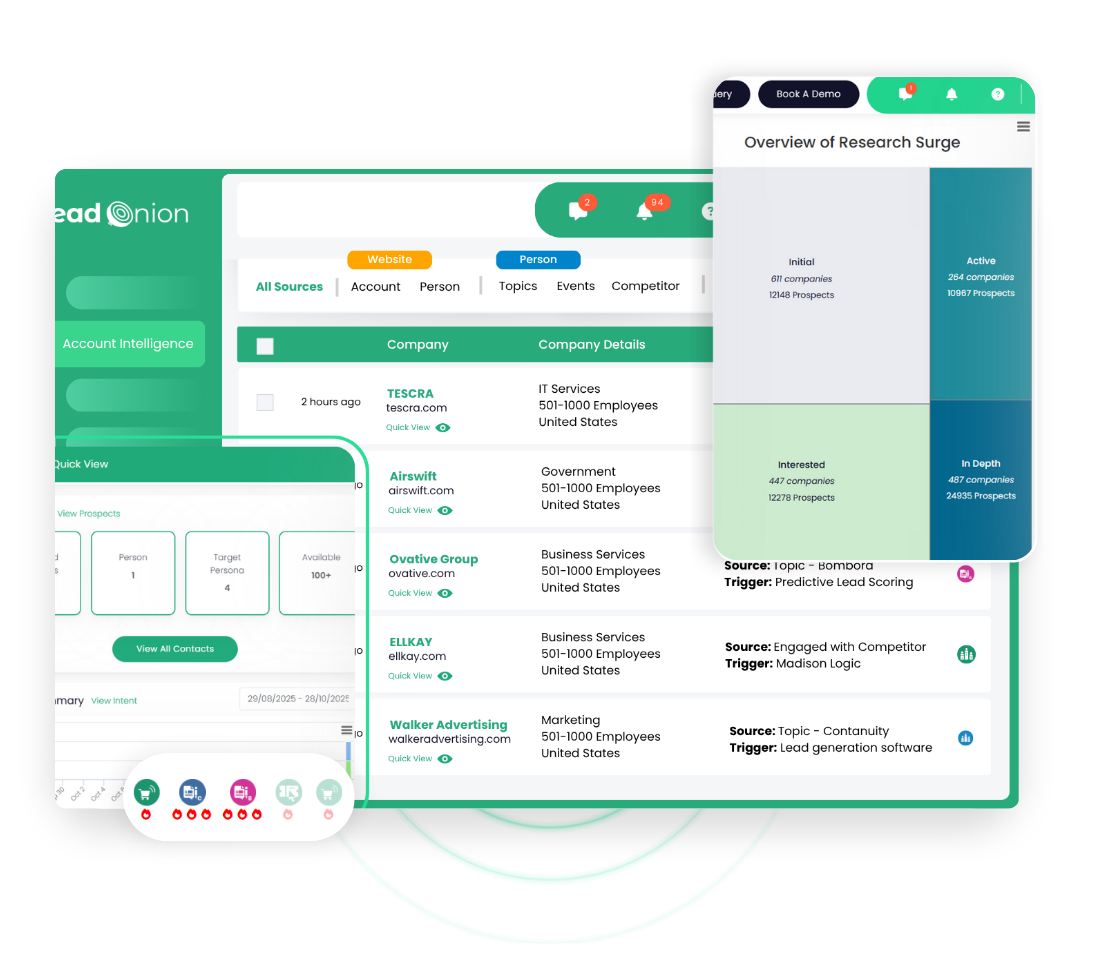
Instead of just showing you a “spike,” a truly intelligent platform uses an AI-driven predictive model to analyze all those signals together. It maps prospects into clear buying phases – “Initial,” “Interested,” “Active,” or “In-Depth”, so you can finally separate the “browsers” from the real “buyers.” This is the difference between raw data and actionable intelligence.
The 3-Layered Intent Advantage: Combining Account, Website, and Person
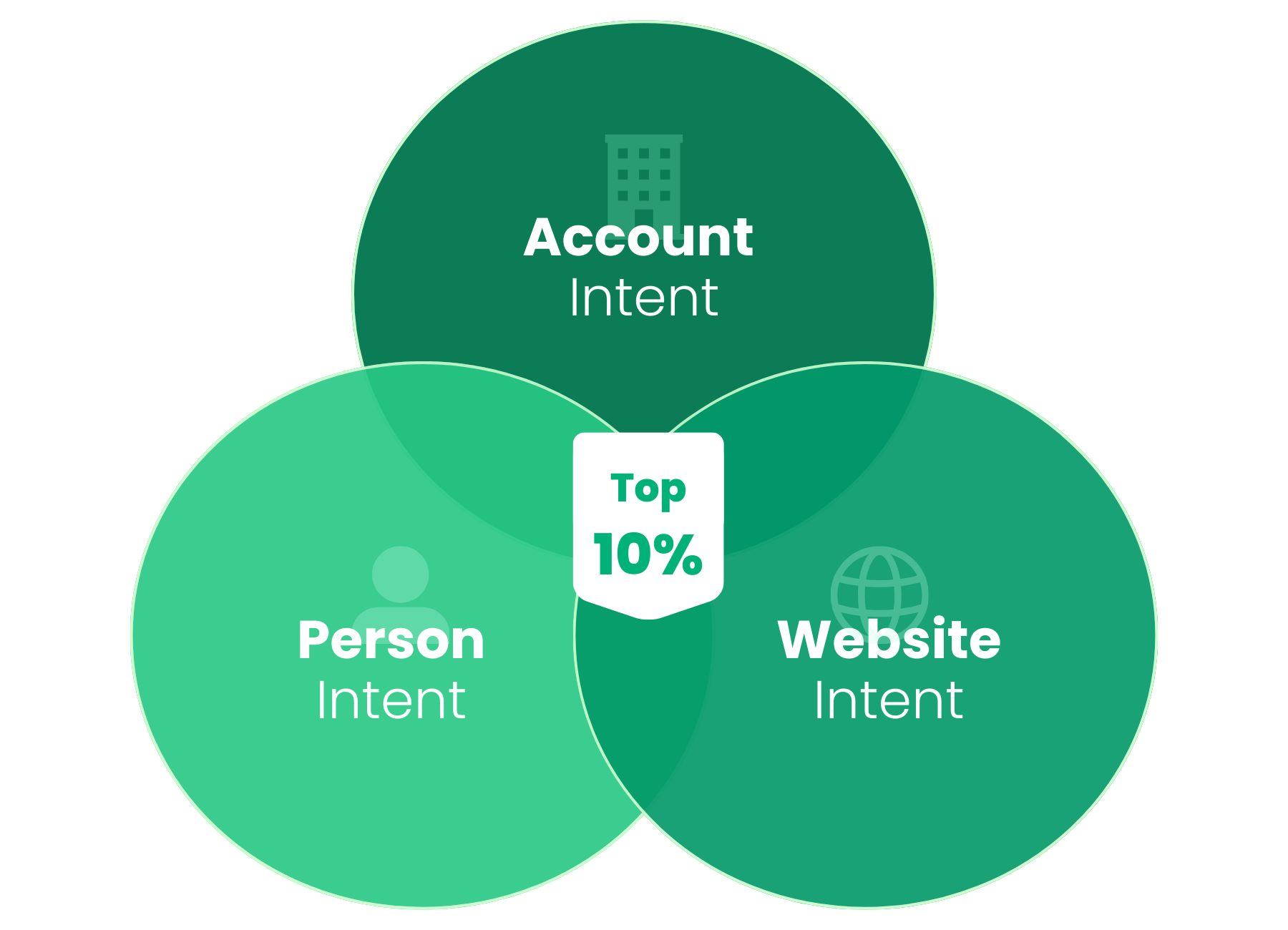
This intelligent, predictively-scored account view is the foundation. But to truly solve the “intern vs. C-level” problem for good, you must combine it with two other critical layers :
- Intelligent Account Intent: Our multi-signal, predictively-scored data tells you which accounts are actively researching (not just browsing).
- Website Intent (First-Party): Our “Reveal Tools” tell you which of those active accounts are already on your website, even if they’re anonymous.
- Person-Level Intent: This is the final, game-changing layer. We show you the exact people at those accounts who are driving the research.
This is the difference between an MQL and an IQL (Intent-Qualified Lead).
An MQL is a vague account spike. An IQL is a verified person at a predictively-scored, active account who is also on your website.
When you have person-level data, the entire GTM strategy changes:
- Marketing can build hyper-targeted audiences based on actual personas and their specific pain points.
- Sales can personalize outreach with confidence. They are no longer “chasing ghosts” but engaging a real human about a topic they are already researching.
- RevOps can, at last, build a Service Level Agreement (SLA) that matters, because both teams have agreed on a single, unified definition of a “lead”: a real person at a target account showing verifiable intent.
Stop Blaming Your Sales Team. Fix Your Data.
The tension between your sales and marketing teams isn’t a people problem. It’s a data problem.
Your sales team’s frustration is a valid and expensive business signal. They are telling you that your MQL-generating machine is broken.
It’s time to stop paying for vague, single-signal “noise” that burns out your best reps. Stop celebrating MQLs built on a guess.
Give them a signal they can act on. Give them the full picture – from the intelligent account, to the website visitor, to the specific person. That’s the only way to fix your broken MQL—and rebuild the trust between sales and marketing for good.
Ready to See It for Yourself?
The best way to understand how IQLs work is to try them yourself. In just a few clicks, you can start finding in-market buyers and turning intent signals into pipeline.